

We are currently living through the final days of a luxury we never truly appreciated: the human pace.
For decades, cybersecurity operated with a somewhat predictable pulse. A researcher found a bug, a CVE was cataloged, a vendor navigated a patch cycle, and weeks or even months later a fix was deployed. In this era, dwell time was a metric of days and weeks. But we are now on the verge of a major shift in the evolutionary timeline.
The catalyst arrived in early 2026 with the release of frontier agentic models: AI entities that no longer just suggested code, but actively tested it. These models don't just automate the offensive lifecycle; they radically compress the time between discovery and weaponization.
Beware the wolves in the fabric #
There is a reason the old saying warns about the wolf in sheep’s clothing. In a rush to stay competitive, organizations have invited AI into the deepest layers of their infrastructure — giving LLM agents write access to repos and allowing third-party AI wrappers to plug into internal APIs. These are the sheep: the helpful, fluffy productivity boosters sitting in our software ribbons.
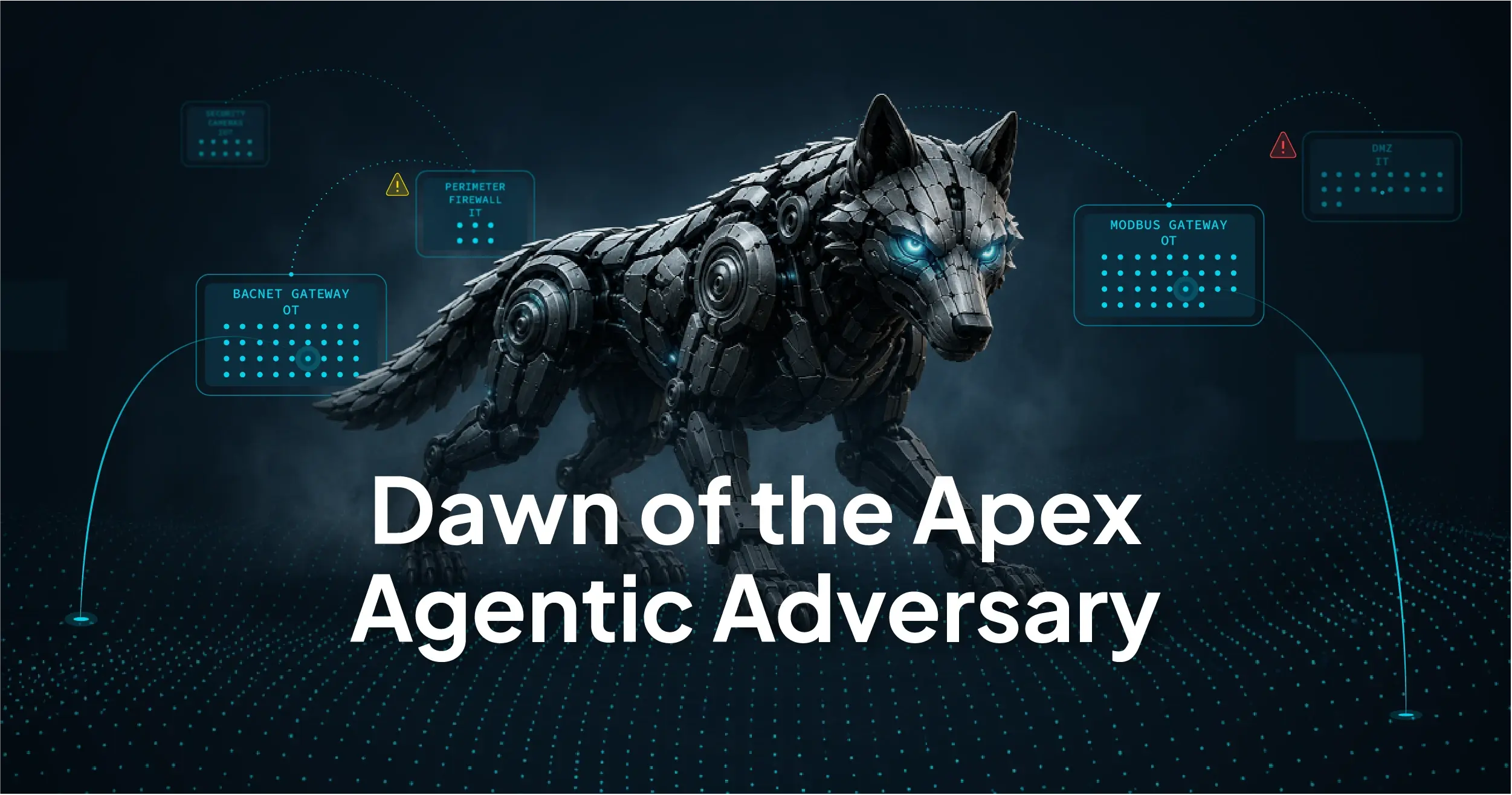
But there lie wolves in the fabric. The same technology that allows a developer to refactor code in seconds allows agentic offensive models to hunt for logic flaws at the same speed. These tools are capable of finding an exposure, weaponizing it, and executing a breach before a human defender has even finished their first cup of coffee. The agility we gained in our workflows is now the agility the adversary can use to dismantle them.
The death of the catalog #
The most unsettling part of this cusp is not just the speed, but the increasing anonymity. In the pre-AI era, we relied on public vulnerability and exploitation accounting like the CVE program, CISA's KEV Catalog, and EPSS. We looked for known signatures and documented behaviors. But as AI-driven breaches become autogenous and self-generating, they become ephemeral. Attacks will soon be so fast, so targeted, and so mutated that they will not even stay in the room long enough to be cataloged.
If attack design, creation, and execution happens at machine speed and there is no signature to find, did it even happen? By the time your SIEM triggers an alert, the AI agent has already breached, escalated, pivoted, spread, exfiltrated, and scrubbed, leaving no trace to investigate.
The convergence trap: IT/OT and the segmentation illusion #
The danger is amplified because our fabric is no longer just digital; it is physical. The continuing convergence of IT and OT has created a unified playground for AI attackers. We used to rely on the segmentation illusion: the comfortable assumption that our critical industrial assets were air-gapped or safely tucked away behind firewalls.
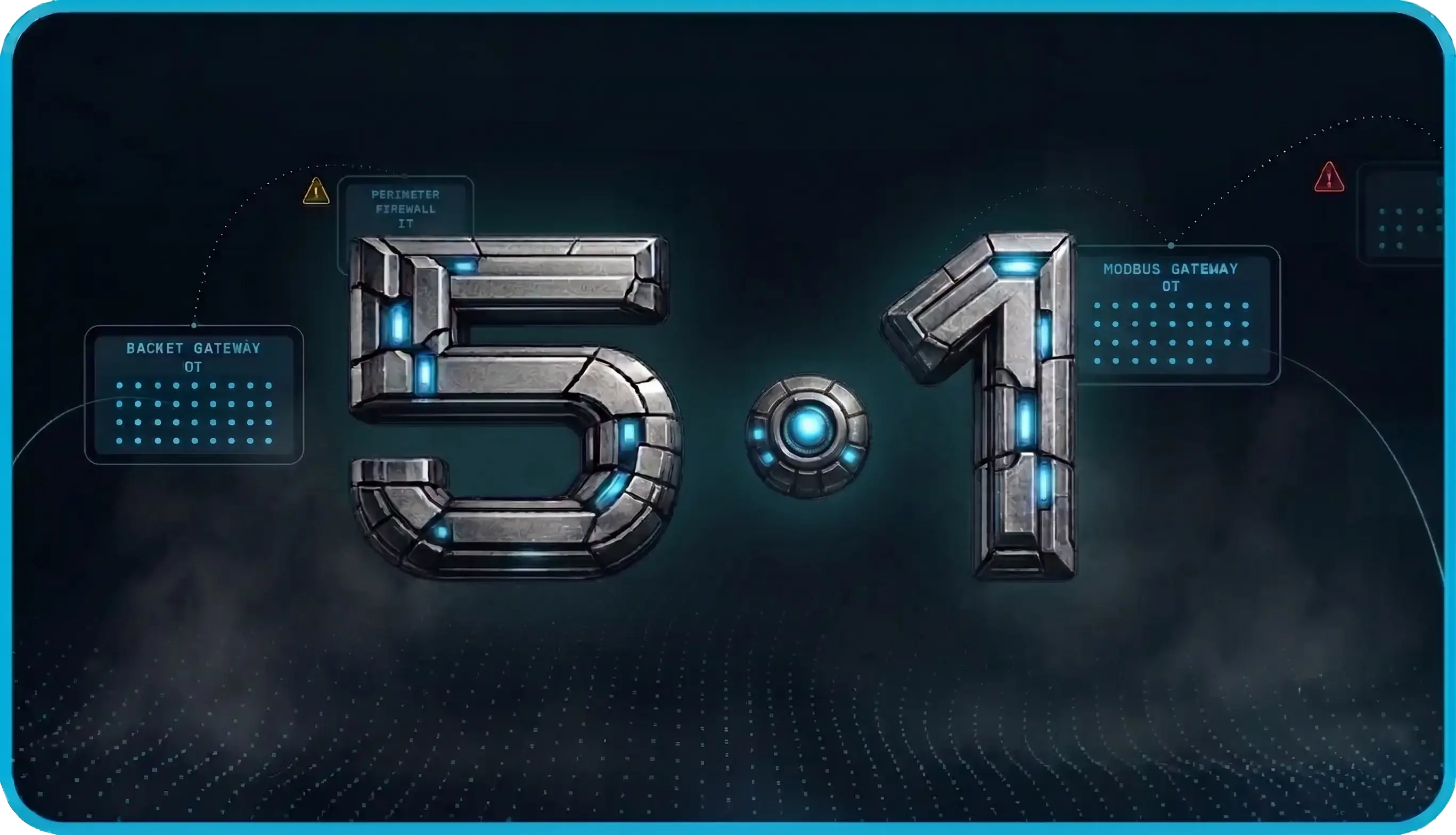
In a converged world, that air gap or segmentation is a design flaw. An AI agent does not see a firewall; it sees an exploitable asset. In this evolving landscape, lateral movement is an automated reflex. The AI identifies the technician's laptop that bridges the corporate Wi-Fi to the factory LAN and traverses that gap in milliseconds. It treats insecure-by-design industrial protocols like Modbus, BACnet, and S7comm as open expressways. When an IT-originated breach cascades into the OT environment at machine speed, it is no longer just a data leak. It is a factory floor shutdown or a safety valve opening. It is the wolf moving from the screen to the physical world.
Taking the tactical high ground (Layer 2 and below) #
The agentic adversary wins by knowing your territory better than you do. They thrive in the information gap — the space between what you think is on your network and what is actually there. Asset inventory is no longer a compliance checkbox; it defines the boundaries of your hunting ground.
While your eyes are fixed on the imminent exploit hitting your secure servers, an AI agent is already identifying the choke points you didn’t know you had — the single multi-homed device or forgotten workstation that grants total access to the critical areas of your network. You cannot outrun a predator if you are tripping over your own blind spots.
To survive, defensive strategies must shift from reactive to proactive environmental hardening. At runZero, we built our latest capabilities to deny the adversary the shadows it needs to operate:
- Mapping the unmappable: In runZero 4.9, we introduced the ability to peek behind protocol gateways. Where traditional tools see a single gateway IP, runZero leverages its unrivaled library of proprietary IT, IoT, and OT protocol safe-probes to walk the backplane. We natively query and unmask the dozens of PLCs and field-level devices sitting downstream, ensuring no industrial asset stays hidden.
- Illuminating the unknown: Agentic models can swiftly hunt for rogue access points, forgotten IoT devices, and shadow IT that lack security coverage. runZero’s unauthenticated discovery uses these same advanced protocol insights to identify unmanaged assets without requiring agents or credentials, ensuring that your blind spots don't become an adversary's primary point of entry.
- Validating the assumption: Our latest research on network segmentation shows that many of these paths are accidental. Our interactive attack path mapping allows you to move past assumptions, visualizing exactly how an attacker could use these multi-protocol environments to move laterally through your IT and OT systems alike.
- Acting on Asset Intelligence: Knowing you have exposures isn't enough; you need to know which ones are most critical to address first. runZero prioritizes your risk by identifying the exact choke points where your vulnerabilities intersect with viable cross-protocol attack paths. Instead of wasting cycles fixing everything, you can fortify the precise defensive bottlenecks that completely cut off the intruder's route to your critical assets.
Identify the predator or become the prey #
We have not yet reached the point where every attack is an instantaneous strike. While frontier AI's offensive capabilities haven't reached total autonomy yet, remember: this is the least capable these models will ever be. The predator is learning.
We are currently moving through the tall grass of the perimeter’s blind spot. While most organizations are still scanning for the tracks of yesterday’s hunters, a new breed of agentic adversary is already circling. Your only hope of survival is to spot the predator before it breaks cover.
runZero is empowering defenders to win by default. Even against AI. Start a free trial today to know every asset on your attack surface, uncover all types of exposures, map every attack path, and validate your segmentation integrity — before the exploit drops.